
Table of Contents
Key Takeaways
- The Problem: Traditional healthcare insurance support is reactive, slow, and costly, leading to frustrated members and higher churn.
- The Shift: AI-driven health insurance platforms move support from reactive to predictive and proactive, anticipating issues before they escalate.
- The Fix: VIZCare Empower automates claims, alerts, reminders, and member interactions, reducing operational costs, improving satisfaction, and ensuring compliance.
- Keep reading to see how predictive AI in health insurance transforms customer support, enhances member experience, and strengthens insurer performance.
As the healthcare insurance landscape evolves and member expectations continue to rise, traditional customer support approaches can no longer keep pace. Today’s members expect fast, accurate answers, transparent communication, and seamless solutions – without the frustration of long wait times or repeated follow-ups.
In an environment defined by mounting competition and growing regulatory demands, healthcare insurers can’t afford to fall behind.
The question is: how will you stay ahead?
In this blog, we’ll explore how AI-driven healthcare insurance platforms are transforming customer support – from reactive problem-solving responses to proactive, data-driven engagement. You’ll discover how predictive AI in health insurance claims, automated member interactions, and personalized communication are reshaping the member experience while reducing operational costs.
Why is Traditional Support Breaking Down?
Traditional healthcare support models were designed for a time when member expectations were lower and service interactions were largely transactional. Today, those models are struggling to keep pace with the demand for faster, more personalized, and proactive experiences.
- Slow Response & High Service Volume : Growing inquiry volumes and limited service capacity often result in longer wait times and delayed resolutions.
- Reactive Service Models : Support is typically provided only after members encounter a problem, rather than proactively addressing needs before friction occurs.
- Fragmented Member Experiences : Complex plan documents, claim uncertainty, and disconnected service channels make it difficult for members to find the information they need.
- Lack of Proactive Communication: Members often receive little visibility into claim progress, benefit utilization opportunities, or next steps in their healthcare journey.
- Declining Engagement and Loyalty: Repeated service frustrations can reduce member trust, lower engagement, and increase the likelihood of switching plans.
- Rising Operational Costs: High call volumes, repeat inquiries, manual processes, and avoidable claim issues increase administrative burden and operational expenses.
| Quick Insight: The biggest barrier to better member experience isn’t a shortage of agents, it’s an overreliance on reactive service models. Scaling a broken process only increases costs. Transforming the experience requires shifting from responding to problems to anticipating them. |
The Clock Is Ticking for U.S. Payers
For U.S. insurers, regulatory pressures are intensifying, and competition is fiercer than ever. Members are switching insurers at increasing rates due to poor service experiences, and the cost of acquiring new members now far exceeds the cost of retaining existing ones.
According to a 2024 Accenture study, more than 50% of consumers are likely to change health insurance providers after a negative interaction with their current one, underscoring the urgent need for insurers to rethink and strengthen their support strategies. Meeting these expectations will require adopting proactive, AI-driven health insurance solutions for insurers that enhance member experiences, improve satisfaction, and preserve long-term trust.
Meeting these expectations now depends on how effectively insurers can reduce latency across service journeys, connect fragmented systems, and apply real-time intelligence where decisions are made and member interactions occur.
The Problem: Reactive Customer Support and Its Hidden Costs
Reactive customer support essentially follows a crisis-driven approach – teams respond only after issues arise, rather than anticipating and preventing them. Delayed claims, unclear denials, billing questions, and plan confusion all compound operational inefficiencies, drive up costs, and frustrate members.
Financial Burden
High volumes of member queries are often handled manually by support teams, resulting in slow response times and increased operating costs. The reliance on constant manual intervention creates operational inefficiencies that strain resources and negatively impact the company’s bottom line.
Member Dissatisfaction
The consequence of a persistent reactive support model is declining member loyalty and a negative brand perception. Frustrated members are more likely to switch insurers, driving up churn rates.
This churn carries a significant financial impact : acquiring a new member is five to 25 times more expensive than retaining an existing one. The stakes are high. If insurers fail to act swiftly to address these challenges, they risk not only lost revenue but also erosion of market share.
The Strategic Shift: From Reactive to Predictive, Proactive Support
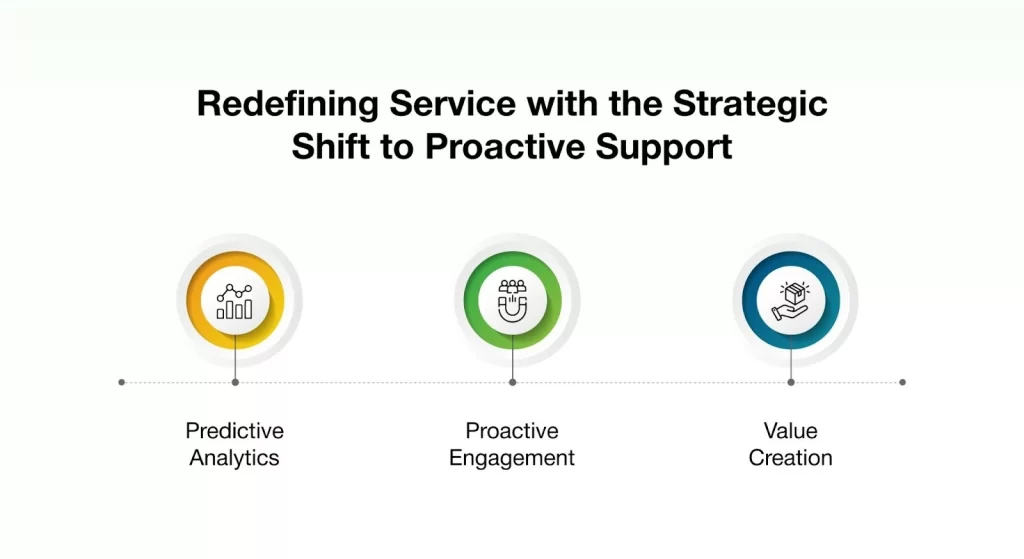
Customer support in healthcare insurance can no longer rely on reacting to problems after they arise. True competitive advantage comes from anticipating and preventing issues before they impact members. By leveraging AI-powered predictive analytics, insurers can proactively identify potential claim delays, detect fraud patterns, and flag churn risks – addressing them before they escalate into real challenges.
Predictive Analytics
AI-driven healthcare insurance platforms leverage data and machine learning to anticipate a wide range of member needs, from potential claim delays to patterns of frequent inquiries. This enables a shift from reactive “detect and repair” models to proactive “predict and prevent” strategies. Rather than waiting for frustration to surface, insurers can address issues early, reduce member effort, and create smoother experiences across the journey. The result is higher satisfaction, stronger engagement, and improved member retention driven by data-informed, proactive service.
Proactive Engagement
AI-driven systems enable automated, proactive member engagement through reminders for appointments, claims status updates, benefit usage alerts, and wellness nudges. By anticipating member needs and communicating proactively, insurers can reduce reliance on support desks, accelerate issue resolution, and build trust – ensuring members feel informed and supported throughout their health insurance journey.
By shifting from reactive to proactive support, healthcare insurance enterprises can deliver greater value to members, streamline operations, and reduce reliance on support desks. Beyond improving operational efficiency, this proactive approach enhances the member experience – fostering transparency, building trust, and strengthening long-term loyalty.
Key Advantages of AI-Driven Customer Support in Health Insurance
AI customer support in insurance delivers far more than just faster responses. It fundamentally transforms insurer operations and strengthens their competitive positioning in several key ways:
Enhanced Member Experience
AI-driven health insurance platforms enable deeply personalized and context-aware interactions, helping members feel genuinely understood at every touchpoint. With real-time data access, AI can instantly surface accurate plan, claims, and benefits information – eliminating long wait times, reducing confusion, and removing the friction of navigating manual paperwork.
This leads to faster resolutions, higher satisfaction, and a more seamless overall experience for members.
Greater Cost Efficiency
AI-driven automation streamlines high-volume, repetitive tasks – such as eligibility checks, benefit queries, and basic claims processing – reducing the need for extensive contact center involvement. By minimizing manual interventions, insurers can redirect teams toward more complex, high-value cases while simultaneously lowering operational overhead.
The result is a more efficient support ecosystem that reduces costs without compromising service quality.
Stronger Compliance & Transparency
AI-driven systems are designed to consistently meet stringent regulatory requirements – such as HIPAA and emerging data privacy standards – while minimizing the risk of human error. These platforms automatically generate detailed, audit-ready logs that enhance visibility into every interaction, ensuring full traceability and accountability.
This level of built-in oversight simplifies secure data management and reinforces member trust in how their information is handled.
Common Concerns Among U.S. Insurers When Adopting AI-Driven Customer Support
“Will AI replace my support teams?”
No, AI customer support in insurance is designed to enhance, not replace, your workforce. By taking on routine queries and repetitive administrative tasks, AI frees human agents to focus on complex, high-value member needs. This not only improves efficiency but also empowers teams to deliver more meaningful, empathetic support where it matters most.
“Can AI maintain compliance?”
Yes, modern AI platforms are designed to uphold strict regulatory requirements from day one. They operate within HIPAA-compliant frameworks, ensuring that member data is protected, properly governed, and handled according to U.S. privacy and security standards.
Built-in safeguards, audit trails, and automated checks help minimize risk while maintaining full compliance at every step.
“What about ROI?”
AI delivers clear, measurable returns by reducing operational costs, lowering member churn, and elevating the overall support experience.
Here are some facts to prove ROI:
- Industry analysis shows that broader AI adoption could generate savings of 5–10% of total U.S. healthcare spending – equivalent to $200–$360 billion annually.
- For private healthcare insurers specifically, AI-driven improvements in areas like claims management, prior authorization, and provider coordination can unlock 7–9% in cost savings, making AI not just a technological upgrade but a meaningful financial advantage.
These savings are made possible by the sophistication of AI-powered predictive analytics working across the entire care continuum.
“How fast can we deploy?”
With AVIZVA’s agile implementation approach, insurers can move from planning to deployment in just a few months. This accelerated timeline allows enterprises to start realizing the efficiencies and performance gains of AI-driven support much sooner – without lengthy, disruptive transitions.
| Quick Insight: The “AI will replace our team” concern is understandable, but it misframes the question. The real question is: what do you want your best people spending their time on? Answering the same eligibility question for the 200th time, or solving the complex member issue that actually requires human judgment? |
What U.S. Insurers Should Look for in AI-Powered Customer Support Solutions
When considering AI-driven customer support solutions, the following are the key factors healthcare insurance enterprises must consider:
Seamless Integration
The AI-driven solution should integrate effortlessly with existing claims, plan administration, and CRM systems to avoid workflow disruptions. Smooth interoperability ensures faster adoption, consistent data flow, and an uninterrupted experience for both members and support teams.
Scalable Performance
The platform must be capable of supporting millions of members without compromising performance. True scalability ensures the solution can expand alongside the enterprise, maintaining speed, reliability, and consistency as demand grows.
Rigorous Security & Compliance
The platform must uphold strict data protection standards, including full HIPAA compliance, while offering the flexibility to adapt quickly to emerging privacy regulations. Robust security controls, continuous monitoring, and configurable governance frameworks ensure member data remains protected and regulatory requirements are consistently met.
Real-Time Data Analytics
The solution should deliver instant access to accurate, actionable data, enabling insurers to make timely, informed decisions. Real-time insights powered by predictive analytics in healthcare, help leadership identify trends, optimize operations, and proactively address member needs – driving continuous improvement across the organization.
Healthcare enterprises should look for AI-powered customer support platforms that are secure, scalable, and purpose-built to address the unique challenges of U.S. healthcare insurers, solutions similar to industry-leading platforms like AVIZVA.
How AVIZVA Powers AI-Driven Customer Support for U.S. Insurers

The demand for faster, more proactive customer support has never been higher. At AVIZVA, we recognize that predictive healthcare analytics and AI-driven customer support are essential for healthcare insurers to stay competitive and exceed member expectations.
That’s why we’ve developed VIZCare Empower, an AI-enabled, one-stop platform that automates and streamlines end-to-end healthcare business operations, enhancing efficiency, compliance, and scalability. Some of its core capabilities include:
1. End-To-End Sales Management
VIZCare Empower gives teams real-time visibility into broker activities, progress, and support needs enabling timely, personalized assistance, faster deal closures, and improved broker satisfaction. The platform streamlines the entire broker journey, from quoting and contract signing to enrollment, all within a single, unified interface.
2. Business Process Automation and Workflow Management
VIZCare Empower offers an intuitive drag-and-drop interface, allowing healthcare teams to build and modify workflows without technical expertise. It integrates seamlessly with existing systems and scales effortlessly with the business. As needs evolve, teams can quickly update workflows to stay agile and efficient.
3. Seamless Onboarding of Groups and Individuals
VIZCare Empower streamlines end-to-end onboarding for new clients and employer groups. With intuitive tools, automated configurations, and seamless workflows, it eliminates manual steps, shortens setup time, and helps teams onboard clients smoothly from the start.
4. Single Pane to Service All Consumers
VIZCare Empower centralizes all the critical data, tools, and context that service teams need to manage and support every consumer whether they’re members, providers, brokers, or employers. It eliminates silos and unites all service teams in one place, enabling them to deliver personalized, efficient, and proactive assistance with ease.
5. AI-Enabled Contact Center Management
VIZCare Empower creates a better experience for both contact center agents and customers. It equips agents with real-time guidance and intelligent insights, helping them resolve customer inquiries faster and more accurately. Whether they’re handling complex claims for providers, supporting brokers, or managing member issues, the platform delivers instant recommendations, knowledge base access, and next-best-action prompts.
6. Timely and Hassle-Free Renewal Management
VIZCare Empower simplifies and streamlines the renewal process. With automated reminders, real-time data access, and optimized workflows, it enables teams to manage renewals more efficiently reducing manual errors and enhancing overall accuracy. From tracking upcoming renewals to managing communications and processing plan updates, everything is seamlessly integrated in a single platform.

Conclusion
With competition intensifying and member expectations higher than ever, US healthcare insurers can’t afford to rely on traditional customer support models.
The move toward AI-driven, predictive, and proactive customer service is more than a trend – it’s the future of healthcare insurance. The adoption of AI-powered insurance solutions like VIZCare Empower enables insurers to deliver a superior consumer experience, streamline operations, reduce costs, and ensure full compliance with U.S. regulations, all while staying ahead of the competition.
The future of customer support is already here. Don’t wait to empower your enterprise. Get in touch now.
FAQs
1. How does AI improve proactive care in healthcare insurance?
AI improves proactive care by leveraging predictive healthcare analytics to identify potential issues, such as claim delays, coverage gaps, or churn risk, before they affect members. AI-driven platforms automatically send alerts, appointment reminders, and benefit usage nudges, keeping members informed and reducing the volume of reactive support queries. This shift to proactive engagement leads to better member outcomes and higher satisfaction rates.
2. Can AI help detect healthcare insurance fraud?
Yes. AI-powered predictive analytics can analyze historical claims data and behavioral patterns to flag suspicious activity in real time. By identifying anomalies that might indicate fraudulent claims or billing errors early, insurers can investigate and act before payments are processed. This not only reduces financial losses but also strengthens the overall integrity of claims management.
3. How does predictive analytics support risk assessment in health insurance?
Predictive analytics in healthcare enables insurers to assess member risk profiles using historical data, utilization patterns, and behavioral trends. AI-powered insurance solutions can identify high-risk members who may require early intervention, helping insurers allocate resources effectively and design targeted care management programs. This data-driven approach reduces costly claims surprises while supporting better health outcomes for members.
4. How can AI-driven health insurance enhance customer satisfaction and retention?
Speedy, personalized customer support by AI health insurance platforms can enhance trust and customer satisfaction. Predictive analytics can help an insurer anticipate member needs, track issues that need attention before they escalate, and engage members more attentively. The members are therefore more inclined to trust the insurer as a result of the enhanced experiences. This leads to higher retention as members feel appreciated and understood.
5. How can predictive AI improve claims processing in health insurance?
Using predictive AI, the claims process becomes far more effective, as potential delays or inconsistencies, such as incorrect claims or fraudulent acts can be identified through assessments of historical data. Suppose these issues are raised promptly. In that case, insurers can resolve them before payment issuance, thereby expediting claims processing and reducing the need for manual interventions, which in turn makes the entire process more efficient and accurate.
6. What are the benefits of AI-powered proactive customer support for insurers?
A proactive AI-driven customer support system fixes issues and anticipates member inquiries before they arise. Through automated responses and real-time updates, together with personalized reminders to members, insurers can enhance operational efficiency and improve member satisfaction. This helps build trust and forge long-term relationships with members.